SIR SAMUEL SWINTON JACOB KCIE CVO
Born 14th January 1841 - Died 4th December 1917
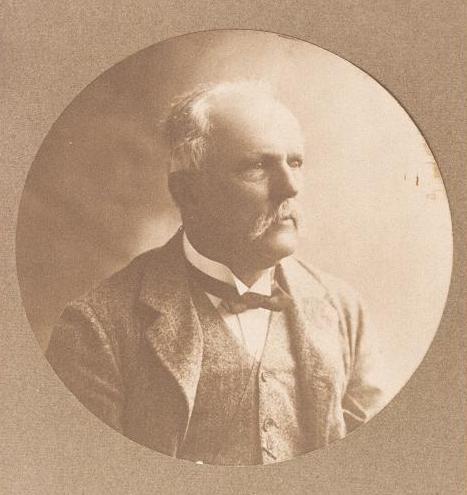
He was a son of Lieutenant-Colonel William Jacob. He was born 14th January, baptized 19th February 1841 at Wynberg, Cape of Good Hope, South Africa, and died on 4th December 1917. He married Mary Hilton, daughter of the fleet paymaster J T Sueter RN, on 28th April 1874. They had no children.
He was brought up in the family of his uncle Philip Jacob, as was his younger brother Edwin Legrand, whom he addresses as father. His father was in India until 1844 and died in England on 5th June 1854. Samuel was educated at Cheam and at the East India Company military college at Addiscombe. He entered the Bombay Artillery in 1858, qualified as a surveyor and engineer in 1863. He served in the Public Works Department. and then in the Aden Field Force 1865-6. He became Chief Engineer in Jairpur State, and was responsible for building many irrigation schemes. He designed and built many substantial and signifiant buildings in India, both for the Government, as also for private individuals. Described by many in India today as fusion architecture, he incorporated many Indian classical elements in his architecture. He was also an advisor druing the development of plans for New Delhi. He was promoted to the rank of Lieutenant-Colonel on 6th Febraury 1885, and to that of Colonel 6th February 1889. He was made a Knight Commander of the Indian Empire on 26th June 1902. He returned to England in 1911 where he died at Weybridge on 4th December 1917.
I
have no photo of his wife, but a clue is given in a letter by Ernest Henry
Jacob, his cousin, written on 19th June from North Brixton: Sam and his
wife are staying at Queensborough Terrace. I have seen her two or three times.
She says very little and that in a low tone with a slight Scottish accent,
but there is an awful lot of her, the prevailing dimension being in thickness,
and the result of her sitting on anyone would, physically speaking, be complete
flatification. Sam was going to take us all to the opera on Friday. but 5/-
tickets are selling at 15/-, so we have declined. So ticket touts were
operating even then!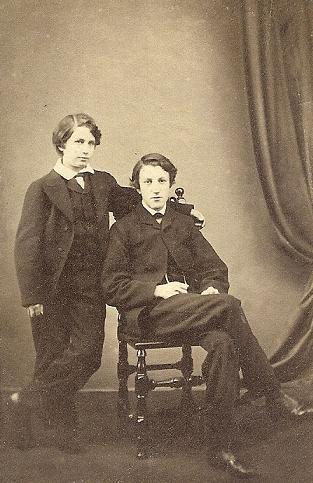
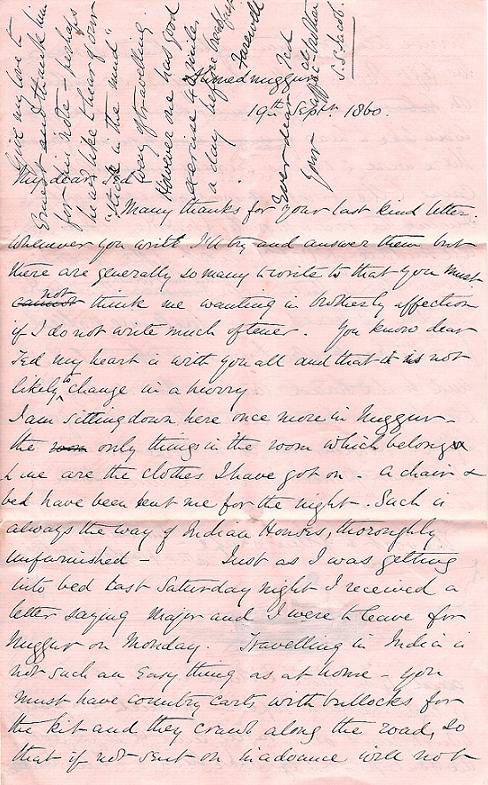
His cousin Edith Jacob writes to her brother (Edgar) on 8th December 1860:
Father had a letter from Sam yesterday with some unexpected news in it. He
had been offered an appointment in the Mountain Train at Jacobabad and had
accepted it having 7 good reasons for doing so. He was just starting for Jacobabad
when he wrote. The Mountain Train consist of three divisions of natives and
there are two European officers in each division. Sam is the second officer
in the first division, the commanding officer is Pottinger (who was in Sam's
term at Addiscome). We do not like the thought of his going to Scinde but
as he says it is not much worse than Aden where has was ordered to and he
says it will be easy to leave if he feels it does not agree with him.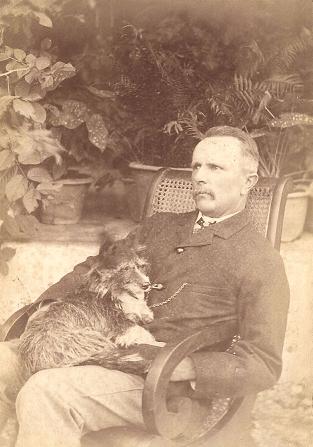
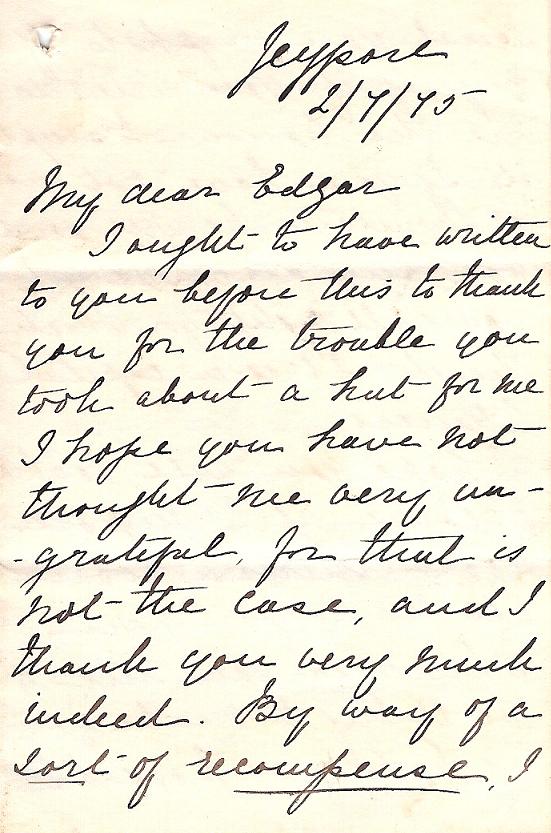
He must have returned to Aden fairly soon afterwards, for in October 1865 he writes to Edgar: You think I must be tired of Aden, well I expect to leave it for India against some time this next year and European officers do not generally stay so long. My work though is a source of interest in itself. I have the scarping of a Range of Hills to look after, also the construction of a graveyard and the erection of a first class lighthouse which will ere long (1 year) bear a light. In the same letter he goes on to say: Adolphus I hear has gone up for examination in Sanscrit. I hate languages and have no time to study at present at any of these dialects. The very name Sanskrit sounds dry does it not.... I am rather radical in my views and aversion to England is one of them.... By the next mail to Bombay I hope to meet Ed Candy and his cousin, after all old England is very near for men come and go quickly.
He comes across as a very kind man, always prepared to help others. In a letter to Gertie (Gertrude Jacob), dated 13th March 1874, written by her sister Edith: He has been doing all he can to befriend Jessie Lipscomb who with her mother has just left town. She sails on the 19th, I called upon them. She looks thoroughly strong and healthy and cheerful. She certainly has sense but needs with much flesh (sic).
Gertrude
writing to her brother Edgar on 11th September 1874: ......I do hope Mary
will grow to be worthy of him (Sam). Her faults are her manner and omission.
But she is honest, and very truthful. You must not trust to Mrs Kinght’s
opinion for she herself is barely a lady. She has (they say) a touch of what
is called black blood in her and was educated entirely in India. We had her
and her husband to stay with us for a week at Bonchurch and she bagan to call
Edith and me by our Xtian names the second day or so to our no small astonishment.
I am afraid there are very few real ladies in India. The Caw Candy class abound,
though I wish all were as timidhearted and as ready to take any amount of
trouble for their friends as that good C C.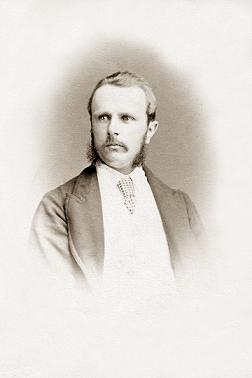
Among
the many notable buildings he designed are:
The main building for St. Stephen's College, Delhi at Kashmiri Gate in Delhi,
built 1890 to 1891.
Albert Hall Museum, Jaipur. Also called the Government Central Museum. Located
on Ram Niwas Bagh, it was built between 1881 and 1886. Maharaja Ram Singh
initially wanted this building to be a town hall, but his successor, Madho
Singh, decided it should be a museum for the art of Jaipur and included as
part of the new Ram Nivas Garden.
Rambagh Palace.
Scottish Presbyterian Mission Church, built 1913-1916 on land donated by His
Highness Madho Singh II at Chandpole, Jaipur.
Bikaner House, Mount Abu, built 1893 as a summer residence for the Maharaja
of Bikaner. This has now been converted into the Palace Hotel.
Laxmi Niwas Palace, Bikaner, built in 1902.
Lalgarh Palace, Bikaner, built between 1896 and 1926.
Umaid Bhawan Palace, Kota, built in 1904.
King George Medical College, Lucknow, built 1905, now called the Chhatrapati
Shahuji Maharaj Medical University.
Daly College, Indore, built 1912.
Links:
.jpg)